Insurance Challenges Unique to Offshore Wind Developers
See How We're Different
Or Call Us: (281) 823-8262

When a single damaged export cable can shut down an entire offshore wind farm for months, insurance stops being a formality and starts to look like a core project risk. At the same time, developers are dealing with levelized cost of electricity jumps of roughly 40 to 60 percent compared with 2020, a spike highlighted in recent analysis by McKinsey. That cost pressure runs straight into an insurance market that is still learning how to price and structure coverage for very large, highly complex assets sitting far offshore.
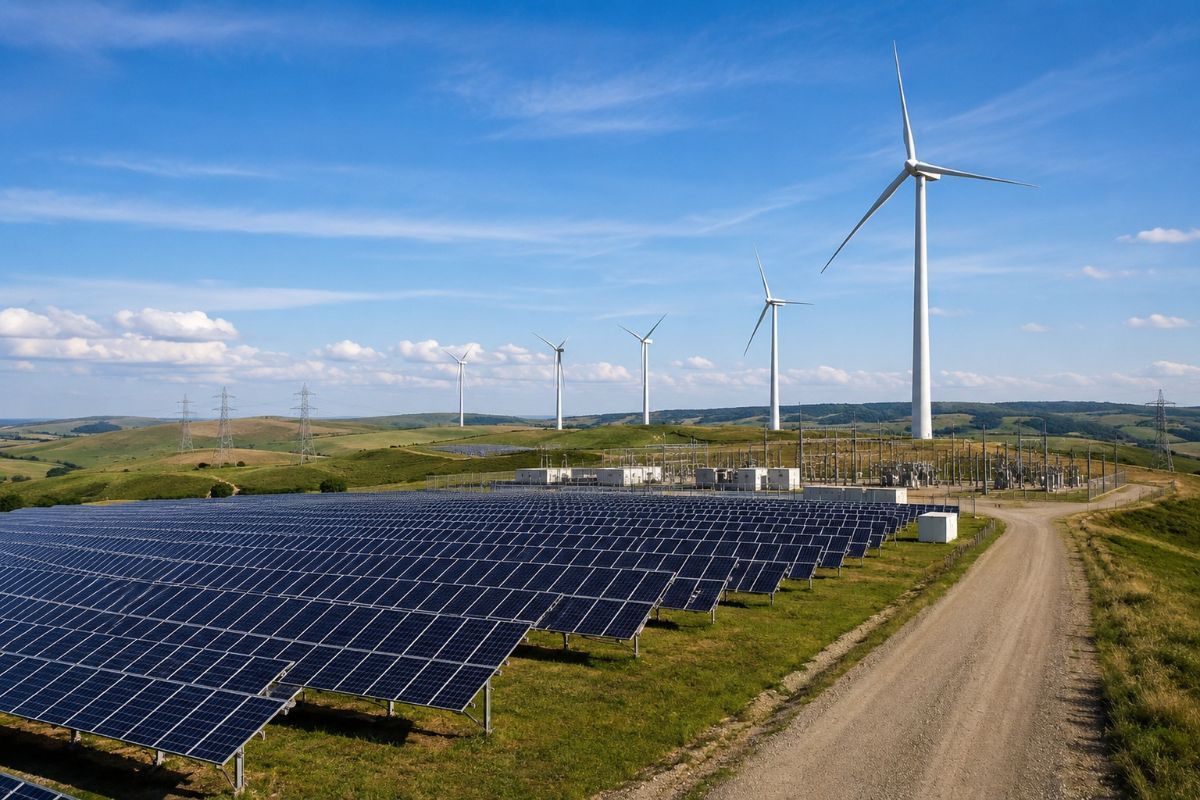
Unlike onshore solar or traditional gas plants, offshore wind projects live in a harsh marine environment, rely on long subsea cable networks, and involve deep interfaces between turbine manufacturers, EPC contractors, vessel operators, and grid operators. Each interface creates room for disputes about who is responsible when something breaks. That is exactly where insurance policies are tested and, in some cases, fall short of what a developer expected.
Understanding these unique challenges is not just a job for risk managers or brokers. Project directors, finance teams, engineers, and operations leaders all need to know how insurance design and claims history affect project bankability, cash flow, and long term asset value. The right cover can stabilize revenue and protect debt covenants. A poorly structured program can do the opposite.
This article breaks down the insurance issues that tend to surprise offshore wind developers, why they matter, and how to prepare. The focus is practical: how risks arise, how insurers view them, and what developers can do before and after a policy is in place.
Why offshore wind risk looks nothing like onshore renewables
From an insurer’s perspective, offshore wind combines traits of marine, energy, construction, and power generation risks in a way that does not map neatly onto traditional products. The asset sits offshore, connected by long subsea cables, assembled by specialist vessels, and maintained in conditions that are hard to access for much of the year. Any loss that requires heavy marine equipment quickly becomes expensive, even if the underlying damage is relatively localized.
Technology maturity also plays a role. Turbines keep getting larger, foundations move into deeper water, and new concepts such as floating platforms expand the operational envelope. Each new design iteration can reduce cost per megawatt on paper, yet it also introduces components and configurations with limited field history. Insurers then have to model failure patterns with less data, which can lead to cautious terms, sublimits, or exclusions.
Contracting structures add another layer of complexity. Multi-contracting strategies, split scopes between OEMs and balance-of-plant contractors, and layered operations and maintenance agreements all affect how risk is allocated. If responsibilities are not clearly aligned with insurance wording, a loss can trigger lengthy debates about whether it falls under construction all risks, marine cargo, delay in start-up, or operational property cover.
Rising project costs and the shifting role of insurance
Financial pressure on offshore wind has sharpened the focus on insurance placement and claims performance. When levelized cost of electricity rises by around 40 to 60 percent relative to 2020, as reported in the analysis by McKinsey, every unplanned outage or uninsured event bites harder into already tight margins. Lenders and investors know this, so they scrutinize policy wording, deductibles, and historical loss experience more than ever.
Insurance still aims to transfer low probability, high severity risks away from the balance sheet. However, in offshore wind, repeated medium sized losses can be just as damaging. Extended downtime while waiting for a repair vessel or specialized component can erode revenue and trigger liquidated damages or covenant issues. The line between protectable catastrophic risk and operational performance risk becomes blurred, and insurers often take a conservative stance on where that line sits.
Developers that treat insurance as a box ticking exercise during financial close can find themselves surprised when a claim runs into gray areas. As costs rise and equity returns come under pressure, it becomes critical to integrate insurance strategy into project design, contracting, and maintenance planning instead of leaving it as a late stage workstream.
Construction phase: where most offshore wind claims start
The construction phase concentrates a high level of activity offshore in a relatively short period, with many contractors working simultaneously in a constrained area. That combination creates fertile ground for incidents. Industry claims data shows that damage to subsea cables is the single largest cause of insurance claims in offshore wind, followed by turbine related losses, according to analysis by Allianz Commercial. It is not hard to see why when one considers the exposure profile.
Heavy lift vessels, trenching tools, anchors, and fishing gear can all damage installed cables, especially when layouts are dense and weather windows are short. At the same time, construction all risks policies often include detailed warranty clauses and tight navigational and procedural requirements. Breaches of these conditions can give insurers arguments to reduce or deny payments if they believe practices deviated from what was agreed.
Turbine installation brings its own set of perils. Blades, nacelles, and towers are transported over long distances and lifted in challenging conditions. Any mishandling can cause hidden defects that only surface later, blurring the boundary between construction damage and manufacturing issues. Sorting out which policy should respond can become time consuming and contentious, especially if responsibilities between OEMs and developers were not clearly tied to insurance programs.
Export and array cable damage
Export cables connect the offshore substation to the onshore grid, while array cables link turbines within the offshore site. Both are expensive, time consuming to repair, and critical for revenue. A single fault on an export cable can halt output from an entire project. Array cable damage may isolate specific strings, but still causes noticeable production losses and triggers complex access and repair campaigns.
Typical damage scenarios include anchor drags, third party vessel interactions, incorrect burial depth, or fatigue at touch down points. Some of these can be traced to construction methods or survey quality, others to operation and maintenance practices. Insurance disputes often focus on whether the event counts as accidental damage during the insured period or a latent defect that falls outside cover. Clarity in wording around defect exclusions, maintenance obligations, and survey standards is essential.
Turbine installation and early operation
During installation, turbines are vulnerable while partially assembled, before all systems and protections are in place. Weather delays sometimes tempt project teams to push operational limits to meet schedule milestones, which can increase strain on lifting equipment and components. If something goes wrong, insurers may look closely at method statements, weather criteria, and vessel logs when evaluating a claim.
In early operation, teething issues can blend into insurable damage. Distinguishing between normal commissioning snagging, design flaws, and genuine accidental damage is not always straightforward. Developers who involve their insurers early, share root cause analyses transparently, and document decisions during commissioning tend to experience smoother claims handling and less dispute about whether an event falls under construction or operational cover.
Operational phase challenges insurers worry about
Once a project moves into commercial operation, the loss profile changes but does not necessarily become easier. Insurers worry less about catastrophic lifting accidents and more about long term reliability, weather related access constraints, and how quickly operators detect and address developing problems. Subsea cable failures remain a top concern, but now they may be linked to gradual degradation rather than a single clearly identifiable incident.
Availability guarantees, power purchase agreements, and merchant exposure all mean that revenue interruptions can be just as painful as physical damage. Yet business interruption or loss of revenue cover in offshore wind often contains strict triggers linked to insured damage, waiting periods, and time limits. Developers sometimes assume that any downtime caused by a technical fault will be covered, only to find that policy language is narrower than commercial agreements with offtakers or lenders.
Cyber, control system vulnerabilities, and data integrity are emerging themes as fleets digitalize. Remote monitoring and predictive maintenance can reduce risk, but they also create new dependencies. A cyber event that affects turbine control systems or substation operations may fall between traditional property, cyber, and liability policies if coverage has not been coordinated up front.
Using controls and data to support your insurance story
Insurers are increasingly interested in how developers use data, simulation, and control strategies to manage uncertainty in wind resource and equipment performance. Research on optimized control co design has shown that advanced strategies can increase market revenue for offshore wind farms by a few percent while improving flexibility in handling wind variability, with one study reporting a 3.2 percent revenue uplift and enhanced ability to manage resource uncertainty as described in an arXiv publication. While this is an engineering result, it carries an insurance message.
Better control and forecasting reduce the likelihood of operating turbines outside recommended envelopes, help operators respond quickly to anomalies, and can lower the chance of major component failures. When developers can demonstrate robust digital strategies, insurers may view the operational risk profile more favorably. That will not automatically lower premiums, but it can support negotiations on deductibles, limits, and coverage extensions.
To make this work, operators need clear documentation of their monitoring systems, decision rules, and escalation processes. Sharing that information during underwriting, not just after an incident, builds confidence and makes it easier for insurers to understand why a portfolio may deserve differentiated terms.
Offshore wind insurance market dynamics: capacity, pricing, and a softening market
The offshore energy insurance market has recently shown signs of softening, even as project complexity and loss experience remain challenging. In one recent year, global offshore energy insurance premiums were reported at 4.34 billion dollars, representing a 7.9 percent decrease from the prior year according to figures cited by the International Union of Marine Insurance. For offshore wind developers, that headline suggests more competitive pricing, but it also carries hidden risks.
When premiums fall, some insurers may stretch their appetite or relax terms to compete for market share. That can look attractive at placement, yet it may mask concerns about long term sustainability if pricing does not keep pace with underlying loss trends. In a sector where cable and turbine claims can be very large and concentrated, a few bad years could prompt abrupt corrections in price or capacity.
Developers need to look beyond headline premium levels and focus on the resilience of their insurance partners. Questions about portfolio exposure to offshore wind, risk appetite through the full market cycle, and claims paying track record become especially important in a soft market. A slightly cheaper premium is rarely worth it if coverage is fragile when a major loss occurs.
How to structure an offshore wind insurance program that actually works
Designing an effective offshore wind insurance program starts with mapping risks across the full asset life cycle and aligning them with contracts and responsibilities. Construction all risks, marine cargo, delay in start-up, operational property damage, business interruption, third party liability, and specialty covers like cyber or environmental liability all need to fit together without gaps or unintended overlaps. That requires close coordination between developers, lenders, brokers, and technical advisers.
Capacity in the offshore renewable energy market is significant but not unlimited. One analysis from NARDAC reported that the average capacity available per project among underwriters was around 164 million dollars, with the most common offering being 200 million dollars, and also noted that offshore wind pricing had been softening for more than a year with an expectation that this trend may continue, as discussed in a market commentary. Large projects therefore often require layered structures and syndicated placements across multiple insurers to reach desired limits.
As programs become more layered, wording consistency and claims coordination grow in importance. Developers should pay close attention to how deductibles and sublimits apply across layers, who leads in the event of a claim, and how follow markets will respond to coverage decisions. Clear communication protocols and claims cooperation clauses help avoid delays when an incident needs a rapid, coordinated response.
| Aspect | Construction phase cover | Operational phase cover |
|---|---|---|
| Main purpose | Protect against damage during transport, installation, and commissioning, plus related delay in start-up where purchased. | Protect physical assets in service and, where included, loss of revenue following insured damage.ans |
| Key exposures | Subsea cable damage during laying, lifting accidents, weather related installation losses. | Cable faults in service, turbine and gearbox failures, substation issues, weather driven access limitations.ez |
| Typical challenges | Defining when construction ends and operation begins, interfaces between contractors and OEMs. | Proving a single insured cause for downtime, aligning policy triggers with offtake and financing terms. |
| Claims complexity | Often high, due to many contractors and marine operations involved in a loss. | High where root cause is disputed or gradual degradation is involved, especially for cables. |
Bringing construction and operational programs into a single strategic view helps avoid pitfalls such as gaps at handover, mismatched definitions of insured property, or inconsistent treatment of defects. Some developers run joint workshops with contractors, OEMs, and brokers early in the project to align expectations about responsibilities and documentation. That investment tends to pay off when the first significant claim arises.
Frequently asked questions about offshore wind insurance
Offshore wind insurance can feel opaque, especially for teams that come from onshore renewables or conventional power backgrounds. The questions below reflect common concerns from developers, investors, and project partners who are navigating this space.
Why is cable damage such a big deal for insurers?
Subsea cables are expensive to repair, require specialized vessels, and can take a long time to diagnose and fix. A failure can remove a large share of a project’s output, so even a single incident can generate a substantial claim that includes both repair costs and, where covered, loss of revenue.
Can all revenue losses be insured in offshore wind?
No. Most policies only respond to revenue losses that directly follow insured physical damage, and only after a defined waiting period. Commercial risks such as low wind resource, curtailment, or unavailability without insured damage are usually excluded and must be managed through design, operations, and financial structuring.
How do insurers view newer technologies like floating wind?
Insurers tend to be cautious with technologies that have limited operating history, which can result in tighter terms, higher deductibles, or lower limits. Developers can mitigate this by sharing detailed engineering studies, testing results, and risk assessments to demonstrate that potential failure modes are understood and managed.
Does a soft insurance market mean developers should always push for the lowest premium?
Not necessarily. Very low premiums in a complex, loss prone segment may signal that pricing is unsustainable, which increases the risk of sharp corrections or reduced appetite after significant losses. Many developers prioritize stable, long term relationships and sound wording over the absolute lowest cost.
What can developers do to reduce disputes when a claim happens?
Clear contract allocation, consistent policy wording, thorough documentation of procedures, and prompt communication with insurers all help. Involving risk and insurance specialists early in project and maintenance planning can prevent many of the ambiguities that later turn into arguments.
Before you go: practical steps to strengthen your risk profile
Insurance challenges in offshore wind will not disappear, but developers can do a lot to shape how insurers view their projects. One area with growing promise is the use of structured techno economic models to align incentives between asset owners and maintenance providers, which research has shown can reduce conflicts of interest and better coordinate decision making, as explored in a study available through arXiv. When maintenance strategies and commercial objectives are aligned, the risk of avoidable failures and prolonged downtime falls, and that is exactly the story insurers like to hear.
Beyond analytics, several practical habits make a difference. Treat insurance as part of project design, not just a closing requirement. Involve underwriters early enough that they can understand the engineering and operations philosophy instead of reacting to a finished structure. Make sure contracts, especially around cables and major components, clearly reflect who bears which risks and how those map to policies.
Finally, remember that an insurance policy is only as effective as the information that supports it. Detailed asset registers, up to date drawings, clear operational procedures, and well organized incident records all speed up claims and reduce room for disagreement. In a sector where a single incident can cost tens of millions and shut down production for months, that preparation is worth as much as any endorsement on the policy schedule.
Search by posts
Recent posts