Understanding Total Cost of Risk (TCOR) for Energy Companies
See How We're Different
Or Call Us: (281) 823-8262

A single storm that knocks out a coastal power plant can erase a year of profit, upset regulators, and shake investor confidence. When events like that are added up across global markets, the price tag becomes enormous. For the largest listed firms in the world, climate physical risks are projected to impose roughly 1.2 trillion dollars in annual costs by the 2050s according to S&P Global research. Energy companies sit right at the center of that story.
Boards, lenders, and regulators are no longer asking only whether a utility or independent power producer is profitable. They want to know how much risk the business carries, how that risk shows up in cash flows and capital costs, and what management is doing about it. Total Cost of Risk, or TCOR, gives energy leaders a way to answer those questions in a structured and financially grounded way.
Instead of looking at insurance premiums or loss events in isolation, TCOR folds together all of the ways risk drains value. It captures insured and uninsured losses, climate hazard exposure, volatility in fuel and power prices, changes in the cost of capital, and the effectiveness of mitigation efforts. Used well, TCOR becomes less of a compliance metric and more of a strategic tool for shaping portfolios, capital plans, and adaptation investments.
What Total Cost of Risk Means for Energy Companies
TCOR started as a way for large organizations to get a handle on what they really spend on risk. For an energy company, that picture is especially complex. There are high value physical assets spread across many locations, long lived infrastructure, political and regulatory exposure, and intense scrutiny from investors and the public.
At its core, TCOR answers a simple question. How much does risk actually cost this business each year once all direct and indirect impacts are included. The value of the concept lies in forcing managers to look across silos instead of treating insurance, safety, compliance, and capital structure as separate worlds.
Key components inside TCOR for energy
Energy companies often start by mapping TCOR into a few broad buckets. The most visible elements are traditional insurance program costs, including premiums, retained losses, deductibles, and broker or captive expenses. These are typically well tracked but only tell part of the story.
Operational and project related losses form another major layer. That includes equipment failures, construction delays, grid outages, environmental incidents, and other events that create unplanned costs or lost revenue. Many of these losses never trigger an insurance claim yet still hit earnings, cash flow stability, and management bandwidth.
A third category covers financial and strategic impacts. Higher financing costs tied to perceived risk, liquidity buffers held on balance sheet, contingent capital arrangements, and even the cost of maintaining investor relations efforts around ESG all belong here. When climate exposure, policy shifts, or technology risk raise doubts about future cash flows, those doubts show up quickly in this part of TCOR.
| TCOR Category | What It Includes | Energy Sector Examples |
|---|---|---|
| Risk transfer costs | Premiums, deductibles, self insured retentions, captive costs | Property and casualty cover for generation assets, liability programs for pipelines and grids |
| Retained and uninsured losses | Losses below deductibles, excluded perils, uninsured assets | Storm damage to distribution lines not fully insured, minor spills handled internally |
| Operational disruption costs | Downtime, schedule slips, emergency repairs, overtime | Forced outages at gas plants, delayed interconnection for renewables, blackout restoration costss |
| Financial and capital costs | Higher debt and equity returns demanded by markets, liquidity buffers, covenants ve | Interest rate spreads for merchant generators, equity discounts for carbon intensive utilities |
| Strategic and regulatory impacts | Compliance investments, penalties, reputational impacts, lost opportunities | Grid hardening mandates, early retirement of plants, delays in project approvals |
Why TCOR matters more in energy than many other sectors
Few industries combine long asset lives, heavy regulation, and direct exposure to climate and policy shifts as tightly as the energy sector. A manufacturing company can sometimes move production or change suppliers. A power generator or pipeline operator is tied to specific rights of way, interconnection points, and local weather patterns for decades.
TCOR helps energy leadership teams connect these long term exposures to near term financial performance. It highlights where risks are being underpriced in project economics, where risk transfer strategy is misaligned with asset profiles, and where operational practices are silently adding to volatility. That clarity is essential when capital spending plans, rate cases, and decarbonization pathways all compete for limited resources.
Climate Physical Risk And Its Impact On TCOR
Climate physical risk is no longer a theoretical line item in a sustainability report. For globally diversified blue chip firms, the cumulative cost of climate hazard exposure is projected to reach about 25 trillion dollars by 2050 according to an S&P Global assessment of the S&P Global 1200 index. A meaningful portion of that exposure sits with energy companies that own or rely on physical infrastructure in climate sensitive regions.
What makes climate risk especially challenging from a TCOR perspective is the way it cuts across categories. It influences insured catastrophe losses, unplanned downtime, maintenance costs, safety incidents, and even the cost of water, cooling, and ancillary services. At the same time, it shapes investor perceptions about stranded asset risk, regulatory pressure, and long term demand for different types of generation.
How climate hazards show up in energy operations
Different parts of the energy value chain see climate hazards in different ways. Thermal power plants may face more frequent heat stress, which can limit output or raise cooling related costs. Hydropower operators must manage shifting rainfall patterns and more volatile inflows. Transmission and distribution networks contend with storms, wildfires, and extreme temperatures that test equipment limits.
From a TCOR standpoint, the key is to translate those physical stressors into financial terms. That means modeling how more intense or frequent events can raise expected outage rates, increase emergency repair costs, or reduce capacity factors. It also involves looking at how changing patterns of risk map onto existing insurance structures, including whether coverage terms and deductibles still fit the profile of the assets.
Adaptation, insurance, and the residual risk problem
Many energy companies are investing in adaptation measures such as grid hardening, flood defenses, vegetation management, and diversification of generation locations. These efforts can meaningfully lower expected losses and downtime, which should reduce TCOR over time. The challenge is that not all adaptation spending is equal, and some investments deliver far more TCOR relief per dollar than others.
Insurance plays a central role in handling climate risk, yet it has limits. As catastrophe models evolve and loss experience mounts, some markets are seeing tighter terms, higher deductibles, or reduced capacity. TCOR helps reveal the residual risk that remains after insurance and adaptation, giving decision makers a clearer view of how much volatility the organization is still carrying on its own balance sheet.
Cost Of Capital, Carbon, And Transition Risk
Risk shows up not only in physical losses but also in the price of money. For new energy projects, the cost of debt jumped to about 9 percent in 2023 from roughly 3.2 percent in 2020, driven by a mix of higher benchmark rates and wider spreads according to analysis from the Oxford Sustainable Finance Programme on financing trends for the energy transition. For capital intensive businesses, that shift quickly becomes one of the largest components of TCOR.
Transition risk adds another layer. As policies, technologies, and consumer preferences move toward lower carbon systems, investors are rethinking how they price equity and debt for different parts of the energy sector. Companies with more carbon intensive portfolios, weaker disclosure practices, or slower decarbonization plans are likely to see that risk reflected in higher required returns.
What rising debt costs do to TCOR
When interest costs rise on newbuild generation, transmission, or storage projects, the impact is felt both in levelized costs and in overall risk exposure. Higher leverage costs can reduce financial flexibility, making it harder to absorb shocks from outages, construction delays, or price swings. They may also lead to tighter covenants and more scrutiny from lenders when performance deviates from plan.
Under a TCOR lens, those incremental basis points are not just a macro environment issue. They are a direct, quantifiable cost of risk taking. Choices about technology mix, offtake structures, hedging, and counterparties all influence how lenders perceive project stability. Better alignment of these choices with risk appetite can translate into lower spreads and lower TCOR.
Carbon intensity and the cost of equity
Equity markets are also integrating climate and environmental factors into pricing. Empirical work has found that higher carbon emissions can significantly raise the cost of equity capital, in part through mechanisms like information asymmetry, cash flow volatility, and agency conflicts between managers and shareholders as documented in a recent study on emissions and equity returns. For listed utilities and integrated energy companies, that dynamic feeds directly into TCOR.
From a practical standpoint, this means that decarbonization and transparency are not only about meeting climate goals or satisfying investors. They are also tools for lowering TCOR. Clear transition plans, credible interim targets, and robust emissions data can all help reduce perceived uncertainty, which in turn can ease equity return requirements and improve access to capital.
Generation Portfolio Choices, TCOR, And Price Risk
Technology mix is one of the most powerful levers energy companies have over their risk profile. Different generation assets carry distinct combinations of upfront capital cost, operating cost, fuel exposure, regulatory risk, and climate sensitivity. The cheapest option on a narrow levelized cost basis is not always the lowest TCOR choice once those factors are fully considered.
Construction costs are a visible part of that equation. In 2022, average construction cost per kilowatt for new power generation was estimated at about 1,451 dollars for wind, roughly 1,588 dollars for solar, and around 820 dollars for natural gas power plants according to an industry perspective from RAND Corporation. Those figures highlight why gas has often been seen as a lower cost option on a pure capital basis, even as renewables gain ground in many markets.
Construction cost versus lifetime risk
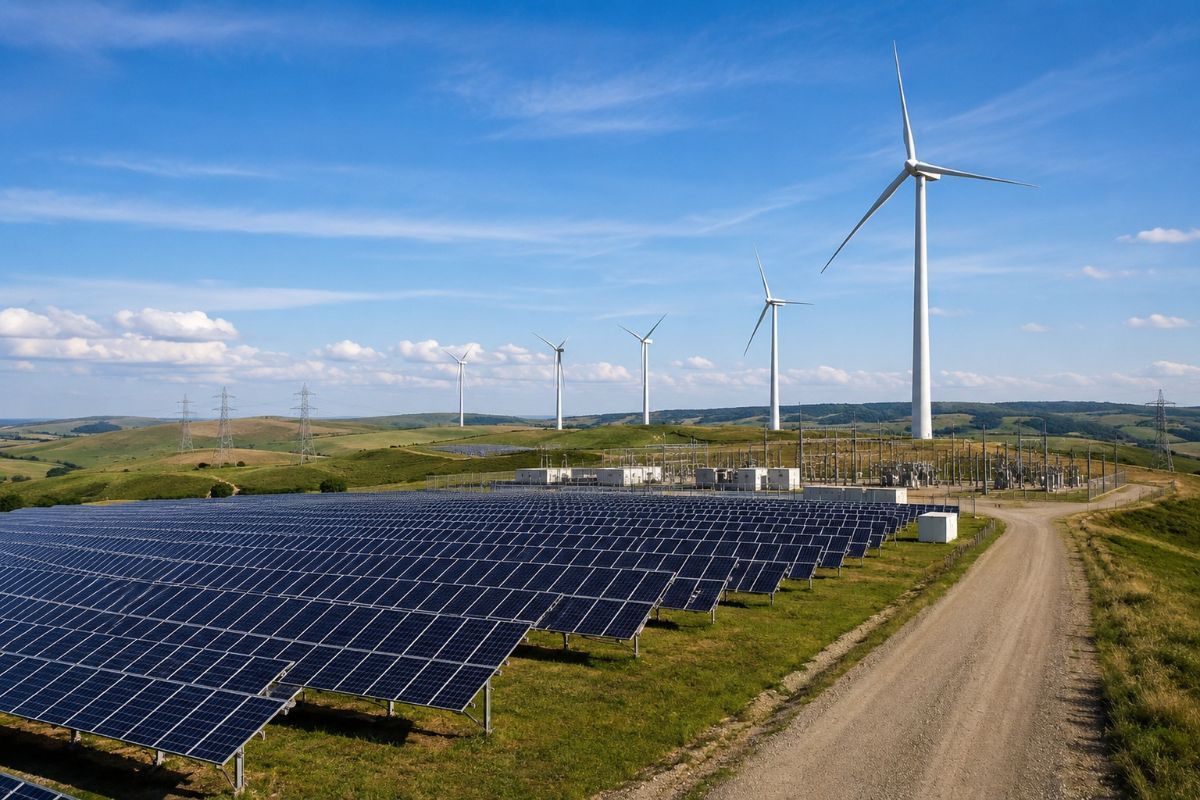
TCOR pushes planners to look beyond the first capital cost comparison. Wind and solar may have higher construction costs per kilowatt in some contexts, but they reduce or eliminate exposure to fuel price volatility. They also generally avoid carbon pricing or emissions compliance risks, and they can carry a different profile of climate physical risk depending on siting and design.
Gas fired generation, by contrast, often offers dispatchable capacity and relatively low upfront capital cost. Yet it embeds ongoing exposure to fuel markets, potential shifts in carbon policy, and reputational risk in jurisdictions that are tightening climate targets. When these lifetime risk factors are modeled into TCOR, the apparent gap in cost attractiveness between technologies can narrow or even reverse.
Price volatility, customer bills, and regulatory exposure
Energy companies that operate in regulated or partially regulated environments must also think about how risk flows through to customers. Retail tariffs, industrial contracts, and public sector offtake agreements all influence who ultimately bears fuel price and market volatility. In many regions, regulators are increasingly sensitive to bill stability, not only to average price levels.
In that sense, TCOR is intertwined with social and political license to operate. Portfolios that create highly volatile customer outcomes can invite stricter oversight, pressure to absorb more risk on the utility balance sheet, or forced changes in generation mix. By intentionally designing portfolios and contracts to dampen volatility, companies can reduce both financial TCOR and the risk of disruptive regulatory intervention.
| Generation Type | Upfront Cost Profile | Key TCOR Drivers | Potential TCOR Advantages |
|---|---|---|---|
| Wind | Higher build cost per kilowatt in many markets | Site specific climate exposure, curtailment risk, integration costs | No fuel price risk, limited carbon policy risk, reputational benefits |
| Solar r base | Capital intensive, often modular and scalable d vendors | Weather variability, land use constraints, potential curtailment | No fuel risk, relatively predictable output profile, broad policy support |
| Natural gas | Lower upfront cost per kilowatt in many contexts | Fuel price volatility, carbon policy risk, potential stranded asset risk | Dispatchability, system reliability contributions, flexible operation |
Practical Playbook To Measure And Manage TCOR
TCOR only becomes useful when it moves out of a spreadsheet and into decision making. For energy companies, that starts with ownership. Risk, finance, operations, and strategy teams all influence different pieces of TCOR, so someone has to coordinate the picture and keep the framework consistent.
A practical approach is to begin by cataloging the major categories of risk cost, using the organization’s own language and structures. Insurance and retained losses are often easiest. From there, attention can shift to operational disruptions, project overruns, financing costs related to risk, and major compliance or adaptation investments. The initial goal is not perfect precision but visibility across silos.
Building a TCOR framework that fits the business
No two energy businesses look exactly alike, so TCOR frameworks should reflect real risk drivers rather than generic templates. A regulated transmission operator will focus more heavily on asset health, grid reliability, and storm response, while a merchant renewable developer will place more weight on construction risk, offtake structures, and counterparty credit.
Once the core categories are defined, data quality becomes critical. Historical loss records, outage statistics, project performance metrics, and financing terms all feed into TCOR estimates. Some companies choose to layer in scenario analysis for climate hazards or policy shifts, which can help capture how TCOR might evolve over the life of long lived assets rather than only reflecting past experience.
Turning TCOR insights into decisions
The value of TCOR lies in the trade offs it makes visible. When leaders can compare the TCOR of different portfolio options, insurance structures, or capital projects, they can start to optimize not only for return but for risk efficiency. Investments that slightly raise expected costs yet significantly reduce volatility or tail risk may look more attractive once TCOR is on the table.
TCOR also helps prioritize risk mitigation initiatives. Instead of pursuing a long list of safety, resilience, and adaptation projects in parallel, companies can target the ones that remove the most TCOR per dollar spent. That might mean grid hardening in one geography, renegotiating offtake terms in another, or accelerating the retirement of a particularly risky unit even if it remains profitable in the short term.
Frequently Asked Questions About TCOR For Energy Companies
Many energy executives and risk professionals are familiar with the idea of risk management but less familiar with TCOR as a specific framework. The following questions come up often when boards and leadership teams explore how to embed TCOR into planning and operations.
How is TCOR different from traditional insurance focused risk metrics
Traditional metrics focus on premiums, claims, and loss ratios, which only capture the portion of risk that runs through insurance programs. TCOR includes those items but extends to operational disruptions, uninsured losses, financing costs tied to perceived risk, and major mitigation investments. For energy companies, that broader view is essential because many of the biggest value impacts never appear in an insurance claim.
Does TCOR only matter for very large utilities
Large, listed utilities and integrated energy companies often have more formal TCOR frameworks, but the concept is equally relevant for mid sized and smaller players. Any business that owns critical infrastructure, raises debt or equity, and faces climate or regulatory exposure can benefit from understanding the full cost of risk. The level of detail can be scaled to match the size and complexity of the organization.
How should climate physical risk be incorporated into TCOR
Climate hazards should be treated like any other driver of loss, downtime, and capital cost, which means linking hazard data to specific assets, operations, and financial metrics. Many companies start by identifying critical sites and estimating how changing hazard profiles might affect outage rates, damage probabilities, and maintenance costs. Over time, those estimates can be refined with better modeling, experience from events, and data from peers or industry bodies.
Can investments in energy efficiency influence TCOR
Yes, energy efficiency often reduces both operating costs and exposure to price volatility, which can lower TCOR indirectly. Research has found that the value of reduced price risk from efficiency investments can represent roughly 10 percent of the total annualized costs of those investments over a decade long period, highlighting risk reduction as a meaningful part of the business case according to an MDPI study on energy efficiency and price risk. For energy providers and large consumers alike, that makes efficiency a useful tool in the broader risk management toolkit.
How can TCOR help with conversations with investors and regulators
Investors and regulators both want to understand how well an energy company is identifying, quantifying, and managing its risks. A clear TCOR framework demonstrates that leadership is not only tracking incidents but also linking risk to capital allocation, portfolio design, and resilience planning. That level of transparency can support more constructive discussions on rate design, cost recovery for adaptation, and access to capital for transition related investments.
What is the first practical step toward implementing TCOR
A realistic first step is to bring together leaders from risk, finance, operations, and strategy to agree on a shared view of major risk cost categories. From there, the team can map existing data sources, identify obvious gaps, and pilot TCOR analysis on a subset of assets or projects. Early wins often come from simply surfacing hidden costs and helping decision makers see how risk is embedded in day to day operations and long term plans.
Search by posts
Recent posts