Managing Grid Curtailment and Congestion Risks
See How We're Different
Or Call Us: (281) 823-8262

Renewable energy projects face a growing threat that has nothing to do with equipment failure or weather damage. Grid curtailment and congestion risk now rank among the top financial concerns for solar and wind developers, and for good reason. U.S. renewable energy curtailment
reached 23.8 million MWh through July 2026, a 17.5% jump over the prior year. When grid operators tell your project to stop producing, or when transmission bottlenecks crush the price you receive, the revenue impact can be severe. Understanding the insurance limits, revenue exposure, contractual tools, and mitigation options available is no longer a nice-to-have: it's essential for any project owner or investor trying to protect long-term returns. The challenge is compounding, too. Surging electricity demand from AI data centers is colliding with a transmission system that hasn't kept pace, creating congestion hotspots across the country. Standard insurance policies weren't designed for this kind of risk, and many
project owners don't realize the gap until a claim gets denied.
Understanding Grid Curtailment and Congestion
Grid curtailment occurs when a system operator instructs a generator to reduce or halt output. Congestion happens when transmission lines can't carry all the power being produced in a given area, creating bottlenecks that distort pricing and limit access to markets. Both problems are intensifying as renewable capacity grows faster than the grid's ability to absorb it.
Physical vs. Economic Curtailment
Physical curtailment is a direct order from the grid operator: your plant must ramp down because the system can't handle more power. This typically happens during periods of high renewable output and low demand, such as sunny spring afternoons in California. Economic curtailment is different. Here, your plant can technically produce, but wholesale prices drop so low, sometimes going negative, that generating power actually costs you money. You shut down voluntarily because running doesn't make financial sense.
The distinction matters for insurance and contract purposes. Physical curtailment triggered by a grid operator order is easier to document and insure. Economic curtailment tied to price signals is harder to define in policy language and often falls into coverage gray areas.
The Impact of Transmission Bottlenecks
Transmission constraints are the root cause of most congestion. The PJM Interconnection region saw a sixfold increase in curtailment starting in 2024, driven largely by concentrated demand shocks from data centers in Northern Virginia. In Texas, ERCOT curtailed 9.8 TWh of renewable energy in 2025, a 98% increase compared to 2020.
The Netherlands offers an international cautionary tale: a
five-fold increase in solar PV has outpaced grid expansion, forcing operators to adopt flexible "traffic light" deployment strategies just to keep the system stable. These aren't isolated cases. They're patterns that any developer siting a new project needs to study carefully.
Financial Risks for Renewable Energy Projects
The financial consequences of curtailment and congestion go well beyond a few hours of lost production. They can erode project economics, trigger debt covenant violations, and undermine investor confidence over the life of an asset.
Revenue Loss and PPA Implications
If your project operates under a power purchase agreement with a fixed price, curtailment means you're producing less volume to sell at that price. Some PPAs include curtailment provisions that allocate risk between buyer and seller, but many older contracts don't address it at all. A project that expected to generate 300,000 MWh annually but consistently produces only 260,000 MWh due to grid constraints faces a 13% revenue shortfall, year after year.
For merchant projects selling into wholesale markets, the exposure is even more direct. You lose both volume and price, since congestion often coincides with depressed local pricing.
Basis Risk and Locational Marginal Pricing (LMP)
Basis risk is the gap between the price at your project's node and the hub price referenced in your hedge or PPA. When congestion hits, your local node price can collapse while the hub price stays high. You're locked into a financial settlement based on the hub, but your physical power is worth far less at your actual location.
This mismatch can turn a profitable hedge into a loss. Projects in congested zones like West Texas or parts of the Midwest have seen basis differentials widen to $15-$20/MWh during peak congestion periods [https://oceanpoint.claims/claim-types/commercial-business-interruption-bi-loss-of-use/]. That kind of spread can wipe out a project's margin entirely.
Mitigation Strategies for Developers and Owners
Waiting for the grid to catch up isn't a strategy. The U.S. Department of Energy's $5.25 billion "SPARK" initiative aims to add 23 GW of capacity through reconductoring and grid-enhancing technologies, but those upgrades take years. Project owners need to act now with tools they can control.
Energy Storage and Hybrid Systems
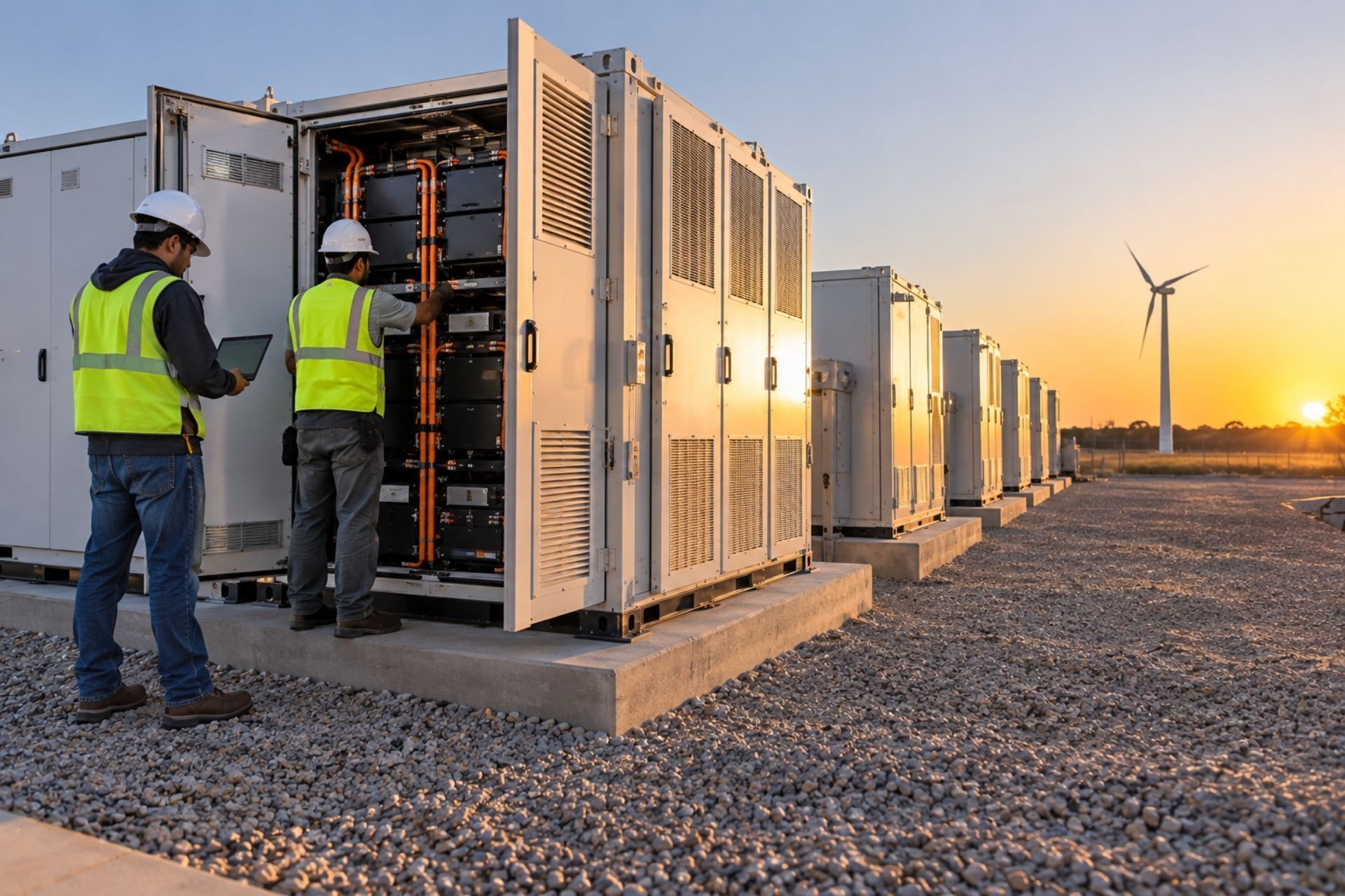
Pairing a solar or wind project with battery storage lets you shift production to higher-value hours and avoid curtailment during oversupply periods. If the grid operator orders you to ramp down at noon, you can charge batteries instead of wasting the energy. You then discharge during evening peaks when prices are higher and transmission is less constrained.
That said, storage doesn't eliminate the risk. Batteries have finite capacity. During extended curtailment events, your storage fills up and you're back to the same problem. Storage also adds capital cost, so the economics need to pencil out for your specific location and curtailment profile.
Contractual Protections and Hedging Tools
Smart contract structuring is one of your best defenses. PPA negotiations should explicitly address curtailment allocation: who bears the cost when the grid operator orders a reduction? Some developers negotiate "deemed energy" provisions that require the offtaker to pay for energy the project could have produced but for curtailment.
Congestion revenue rights (CRRs) and financial transmission rights (FTRs) are hedging instruments that can offset basis risk. They essentially pay you when congestion occurs on a specific transmission path, compensating for the price differential at your node. The catch is that these instruments need to be purchased in advance, and their availability and pricing vary by market. Mitigation strategies in 2026 have also shifted toward getting more value from existing lines through technologies like Dynamic Line Rating, which adjusts transmission capacity based on real-time weather conditions.
Insurance and Risk Transfer Solutions
Traditional property and casualty insurance for renewable energy projects covers physical damage: a tornado destroys your panels, a lightning strike fries a transformer, a flood takes out your substation. These policies include business interruption coverage, but only for revenue lost during the repair period following physical damage.
Grid curtailment and congestion don't involve physical damage to your equipment. Your project is sitting there, ready to produce, but the grid won't take the power. Standard policies simply don't cover this scenario. That's the coverage gap that specialized curtailment insurance fills.
Specialized curtailment policies trigger when a grid operator orders a reduction or when locational prices fall below a specified threshold. They pay out based on the energy you would have produced, using historical generation data and weather models to calculate the loss. These policies are typically placed through Lloyd's syndicates and surplus lines carriers that have the technical underwriting expertise to price grid risk accurately.
One encouraging trend: well-engineered projects with strong data packages are seeing property damage insurance premiums drop 20% to 30% as the market softens. That savings can help offset the cost of adding specialized curtailment coverage to your program.
Comparison: Standard vs. Specialized Risk Coverage
| Feature | Business Interruption (Standard) | Curtailment Insurance (Specialized) |
|---|---|---|
| Trigger | Physical damage to equipment | Grid operator orders or price spikes |
| Revenue Loss | Covered if caused by repair downtime | Covered for non-physical grid events |
| Congestion | Typically excluded | Can be included as a specific rider |
| Waiting Period | Usually 30-60 days [https://oceanpoint.claims/claim-types/commercial-business-interruption-bi-loss-of-use/] | Often 24-72 hours [https://oceanpoint.claims/claim-types/commercial-business-interruption-bi-loss-of-use/] |
| Primary Value | Protects against fire/storm | Protects against grid instability |
| Underwriting Focus | Equipment condition, location hazards | Node pricing, transmission capacity, curtailment history |
The distinction is critical. A project owner who assumes their business interruption policy covers curtailment losses will face a rude surprise when the adjuster explains the physical damage requirement. Working with a specialized energy insurance broker who understands both policy types, and who has relationships with the niche markets that write curtailment coverage, isn't optional.
Common Questions About Grid Risk
What exactly is grid curtailment? It happens when the grid operator tells a power plant to stop producing energy to keep the system stable. This usually occurs when there's too much supply or not enough transmission capacity to move the power where it's needed.
Can I get insurance for lost revenue due to congestion? Yes, specialized policies exist that pay out when grid congestion prevents you from selling your power at expected prices. Standard property insurance doesn't cover this, so you'll need a broker experienced in energy risk to source the right policy.
Does energy storage eliminate curtailment risk? It helps by letting you store power to sell later, but it doesn't fix the underlying grid constraints. You still need a plan for when batteries are full and the grid remains blocked, which is why storage works best as one component of a broader mitigation strategy.
Why does my location affect my risk level? Different areas have different grid capacities. If you're in a crowded zone with limited transmission lines, you're far more likely to face congestion. Underwriters call this "locational risk," and it directly affects both your insurance pricing and your project's long-term revenue profile.
Protecting Your Long-Term Investment
Grid curtailment and congestion risk aren't temporary inconveniences. They're structural features of an energy system in transition, and they're getting worse before they get better. Every project owner needs a multi-layered approach: site selection that accounts for transmission constraints, contracts that clearly allocate curtailment risk, storage where the economics justify it, and insurance that fills the gaps your standard policies leave wide open.
The projects that perform best over 20- to 30-year lifespans are the ones whose owners treated grid risk as seriously as equipment risk from day one. That means investing in high-quality engineering data and loss control reports, which not only improve your underwriting outcomes but also give lenders and investors confidence in your revenue projections. Talk to a specialized energy insurance broker who can assess your specific exposure, benchmark your coverage against peers, and place curtailment protection through markets that actually understand how the grid works. The cost of that coverage is a fraction of what an uninsured curtailment event will cost you over the life of your project.
Search by posts
Recent posts