Managing Delay in Startup Insurance for Power Projects
See How We're Different
Or Call Us: (281) 823-8262

A single equipment casualty during construction can stall a power project for months, and the financial fallout doesn't stop at repair bills. Debt service payments keep accruing. Revenue contracts carry penalties. Fixed operating costs pile up whether electrons flow or not. For project sponsors and lenders, delay in startup insurance for power projects is the financial backstop that covers construction delays, testing failures, ongoing debt service, and lost revenue when an insured physical event pushes back the commercial operation date.
The stakes are enormous. Daily indemnity costs for large-scale power projects have climbed to as much as $500,000 per day in 2026, reflecting both the capital intensity and the contractual pressure these developments face. With roughly 45% of construction firms reporting that labor shortages have directly caused project delays this year, the risk environment isn't getting friendlier. Whether you're building a 200 MW wind farm or a gas-fired peaker plant, understanding how DSU coverage works, what triggers it, and how to manage claims is essential to protecting your investment.
This is one of those insurance products where the details matter far more than the headline coverage limit. A poorly structured policy can leave you exposed to exactly the scenario you thought you'd insured against.
Understanding Delay in Start-Up (DSU) Insurance
DSU insurance, sometimes called Advanced Loss of Profits (ALOP), sits alongside your construction all-risks or erection all-risks policy. It doesn't cover the physical damage itself. Instead, it covers the financial consequences of that damage: the revenue you can't earn and the fixed costs you can't avoid while repairs push back your project timeline.
Think of it this way. Your construction policy pays for the broken turbine. Your DSU policy pays for the six months of revenue you lose while waiting for a replacement turbine to arrive from overseas, get installed, and pass commissioning tests.
How DSU Protects Power Project Revenue
Lenders require this coverage to ensure that principal and interest payments can be met even if the project's start date is postponed due to insured perils like fire or natural disasters. The policy typically covers three categories of loss: gross revenue that would have been earned during the delay period, continuing fixed costs such as lease payments and staff salaries, and debt service obligations that don't pause just because construction does.
For power projects with power purchase agreements (PPAs) or capacity market obligations, the revenue calculation is relatively straightforward because contracted rates exist. Merchant power projects require more actuarial work to establish projected revenue, which is one reason underwriters scrutinize merchant exposures more carefully.
The Relationship Between Marine and Construction DSU
A critical gap many project owners overlook is the transit period. Your construction DSU policy typically responds only to physical damage that occurs on-site. But what happens when a custom-built transformer is damaged during ocean transit from the manufacturer? Project owners must transfer this risk through Contingent Cargo DSU, which pays out for lost revenue if equipment like transformers or turbines is damaged in transit.
The handoff between marine cargo DSU and construction DSU needs careful coordination. Gaps between these policies are one of the most common coverage failures I've seen in power project insurance programs. Your broker should map the entire risk timeline, from factory floor to commercial operation, and confirm there are no uninsured windows.
Identifying Critical Triggers for Power Project Delays
Not every delay triggers a DSU claim. The policy responds only to delays caused by physical damage or loss covered under the underlying construction or erection all-risks policy. Schedule overruns from poor project management, permitting holdups, or labor disputes don't qualify on their own.
That said, the triggers that do qualify can be devastating. In 2025, 1,891 power projects representing 266 GW of capacity were canceled in the U.S. alone, and while cancellation and delay aren't the same thing, the underlying causes often overlap: supply chain disruption, equipment failures, and site-specific physical events.
Physical Damage to Specialized Equipment
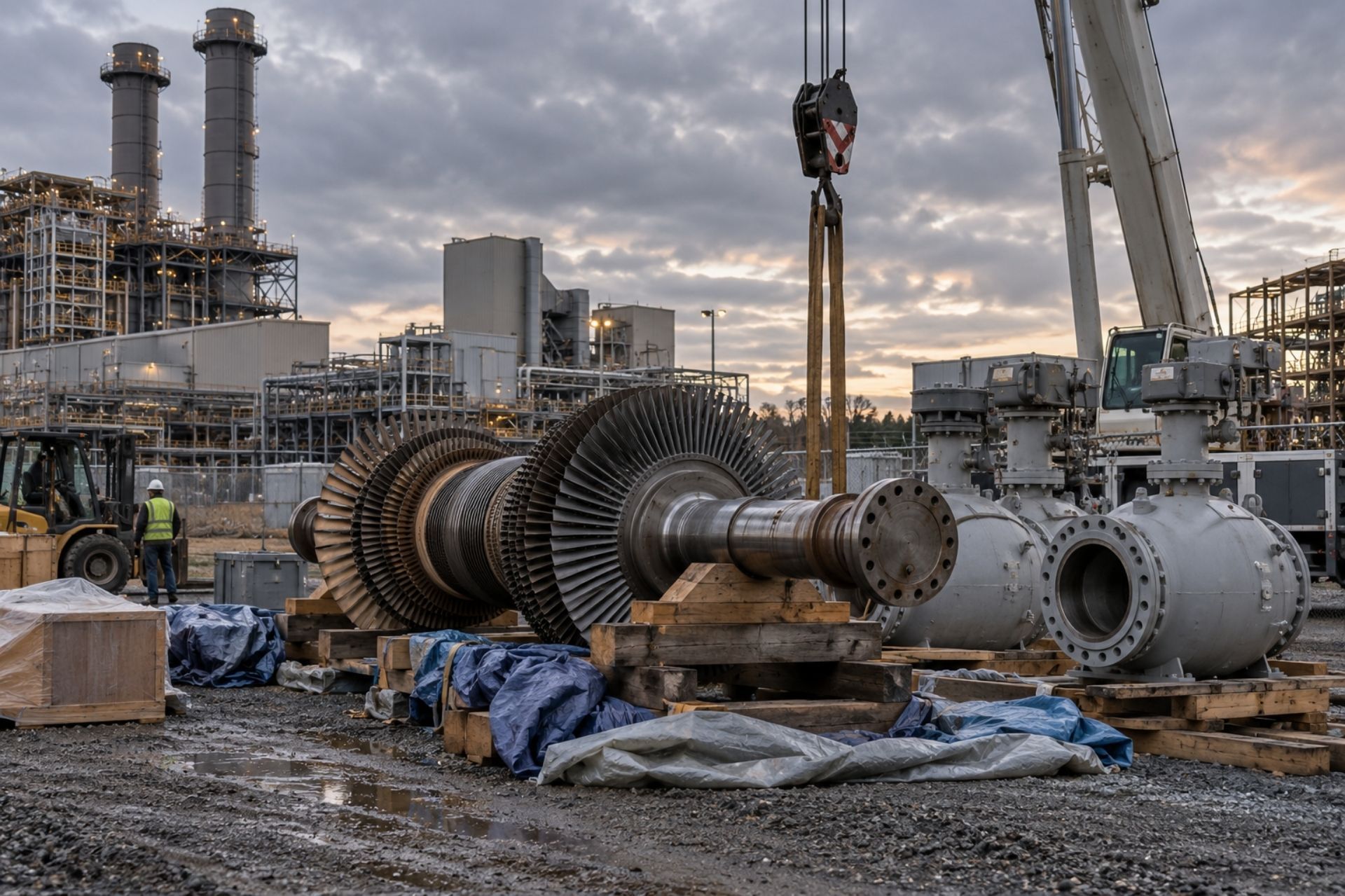
Power projects rely on long-lead-time equipment that can't be sourced off a shelf. A fire in a partially completed gas turbine hall, flood damage to electrical switchgear, or a crane collapse onto a steam turbine generator: these events don't just cost millions to repair. They trigger months of delay because replacement components may have 40- to 60-week manufacturing lead times.
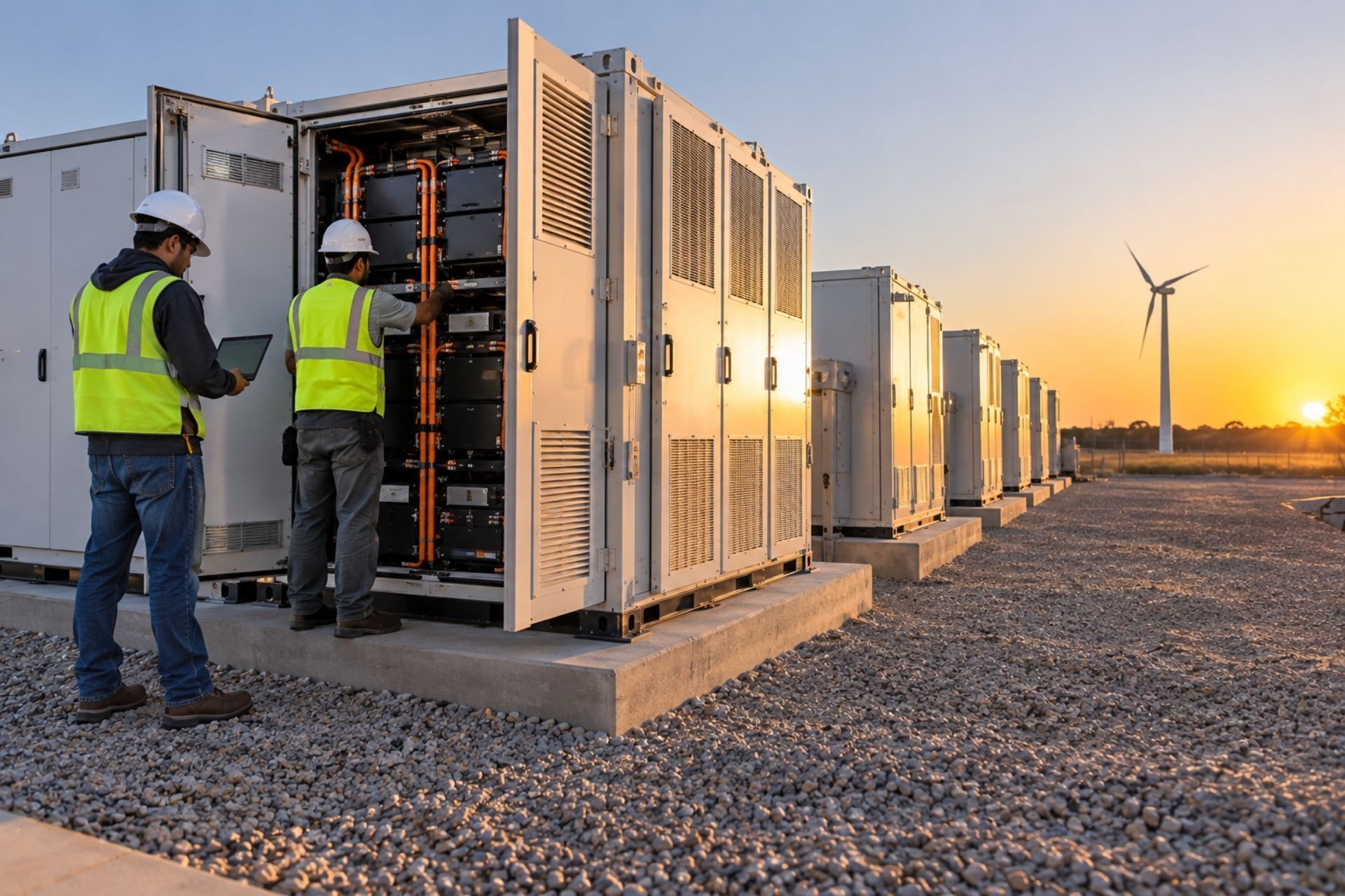
Battery energy storage systems (BESS) present a newer challenge. Technical gaps and commissioning delays are plaguing BESS handovers, and missing delivery dates can result in penalties that dwarf the cost of the physical damage that caused the delay. A thermal runaway event in one battery rack can compromise an entire storage block and push commissioning back by months.
Supply Chain Disruptions and Transit Losses
The global supply chain for power generation equipment remains constrained in 2026. Transformers, high-voltage cables, and specialized turbine components often ship from a handful of manufacturers worldwide. A single incident during ocean transit can delay a project by the full manufacturing cycle of the replacement unit.
This is where Contingent Cargo DSU becomes critical. If a 345 kV transformer is damaged at sea and the replacement lead time is 14 months, your construction DSU alone won't cover the delay because the damage didn't happen on-site. You need the marine-linked policy to bridge that gap.
Comparing Coverage: Standard vs. Enhanced DSU Policies
Not all DSU policies are created equal. The difference between a standard policy and a comprehensive one can mean the difference between full financial protection and a coverage shortfall that threatens your project's viability.
DSU policies for 2026 power projects typically include 60- to 90-day waiting periods, with the indemnity period often running concurrently from the date of physical damage rather than the planned commercial operation date. This distinction matters enormously. A concurrent indemnity period means the clock starts ticking on your coverage limit while repairs are still underway, potentially exhausting coverage before you've even reached your original target date.
Comparison Chart: Basic vs. Comprehensive DSU Coverage
| Coverage Feature | Basic DSU Policy | Comprehensive DSU Policy |
|---|---|---|
| Waiting Period | 90 days | 60 days (negotiable) |
| Indemnity Period Start | Concurrent with damage date | From planned COD or damage date (better of two) |
| Debt Service Coverage | Interest only | Principal + interest + commitment fees |
| Contingent Cargo DSU | Excluded | Included or available as extension |
| Testing/Commissioning Delays | Limited to physical damage during testing | Covers extended commissioning due to insured damage |
| PPA Penalty Coverage | Excluded | Available as sublimit |
| Supplier Extensions | Not covered | Covers delays from damage at key supplier premises |
| Maximum Indemnity Period | 12 months | 18-24 months (https://www.berisintl.com/bess-delay-in-startup-insurance-commissioning-delays-revenue-loss-deductibles-and-claim-triggers) |
The 2026 renewable energy insurance market is experiencing a softening trend supported by strong reinsurance capital, but underwriters are increasingly selective. Well-engineered portfolios with strong loss histories can secure favorable terms, while projects with structural or geographic challenges face tighter conditions. This makes the quality of your submission package, including engineering data and loss control reports, a direct lever on your DSU policy terms.
Best Practices for Claims Management and Monitoring
A DSU claim is only as strong as the documentation behind it. Unlike a straightforward property damage claim where you can photograph the wreckage and get repair quotes, DSU claims require you to prove a financial loss that's inherently hypothetical: the revenue you would have earned but for the delay.
Getting this right starts long before any incident occurs. Your claims preparation should begin the day the policy incepts, not the day something goes wrong.
Maintaining Accurate Project Schedules
Keep a baseline project schedule that's been accepted by all stakeholders, including your insurer. Update it monthly with actual progress, and preserve every version. When a loss event occurs, you'll need to demonstrate exactly how the damage pushed back the critical path.
One common mistake: project teams update schedules to reflect delays without preserving the pre-loss baseline. This makes it nearly impossible to isolate the insured delay from pre-existing schedule slippage. Use a forensic scheduling approach: maintain a contemporaneous record that clearly separates insured delay from other causes.
Documenting Financial Impacts and Fixed Costs
Track every fixed cost that continues during the delay period. Lease payments, staff costs, insurance premiums, loan interest, commitment fees: all of these need contemporaneous records. Your insurer's forensic accountants will scrutinize every line item, so keep source documents organized from day one.
Revenue projections should tie back to your PPA, capacity market contracts, or merchant revenue model. If you're claiming lost merchant revenue, you'll need to show the market prices that would have applied during the delay period, which requires ongoing documentation of wholesale power prices and capacity auction results.
The right choice depends on your project's revenue mix, financing requirements, and risk tolerance. Projects with significant merchant exposure or lender covenants requiring BI coverage will almost always need the comprehensive option.
Common Questions About Startup Delay Insurance
Frequently Asked Questions
Does DSU insurance cover delays caused by weather events? Yes, but only if the weather causes physical damage covered under your construction all-risks policy. A hurricane that damages partially erected wind turbines would trigger DSU. A rainy season that simply slows construction progress would not.
How is the waiting period different from a deductible? The waiting period is a time-based deductible. You absorb the financial impact of the first 60 to 90 days of delay. After that, the policy begins paying. Shorter waiting periods cost more in premium but reduce your retained risk.
Can we insure against delays from damage at our equipment supplier's factory? Yes, through a supplier extension or contingent business interruption clause within your DSU policy. This is especially relevant for power projects that depend on single-source components like custom transformers.
Do lenders always require DSU coverage? Almost universally for project-financed power developments. Lenders need assurance that debt service will be met regardless of construction delays. Even equity-funded projects should carry DSU to protect their return on investment.
What happens if the delay exceeds our maximum indemnity period? You bear the financial burden of any delay beyond the policy's maximum indemnity period. This is why selecting an adequate indemnity period, typically 18 to 24 months for complex power projects, is one of the most important coverage decisions you'll make.
Should we use a specialized energy insurance broker? Absolutely. DSU for power projects involves technical underwriting that generalist brokers rarely handle well. Specialized brokers maintain relationships with Lloyd's syndicates and surplus lines carriers who understand power generation risk. They'll also know how to structure the interplay between marine cargo DSU and construction DSU, which is where many programs fall apart.
Protecting Your Investment Long-Term
Managing startup delay insurance for power projects isn't a one-time exercise. Your DSU program should evolve as the project moves through construction phases, as equipment arrives on-site, and as the commercial operation date approaches. Review your coverage quarterly with your broker to ensure indemnity limits, waiting periods, and covered perils still match the project's risk profile.
The financial exposure from a delayed power project can dwarf the cost of the physical damage that caused it. A $5 million equipment loss can easily generate $50 million or more in lost revenue, debt service costs, and contractual penalties. Your DSU policy is the mechanism that transfers that disproportionate risk to insurers, but only if it's properly structured, well-documented, and actively managed.
Work with a specialized energy insurance broker who understands the technical nuances of power generation risk. Provide your underwriters with detailed engineering data and loss control reports: this is the single most effective way to secure favorable terms. And start your claims documentation on day one, because the quality of your records will determine the quality of your recovery.
Search by posts
Recent posts