Valuing Power Plants: Equipment and Coinsurance
See How We're Different
Or Call Us: (281) 823-8262

A single turbine failure at a gas-fired power plant can trigger losses exceeding $50 million when you factor in equipment replacement, business interruption, and the months-long wait for specialized components. That reality makes accurate property valuation for power plants far more than an accounting exercise: it's the foundation of every insurance decision you'll make. Getting it wrong doesn't just mean paying the wrong premium. It means discovering, in the middle of a catastrophic loss, that your policy won't cover what you thought it would.
The stakes are rising. Power transformer prices have increased by 77% since 2019, and lead times for replacement units now stretch years into the future. Inflationary pressure on specialized equipment, combined with record U.S. electricity demand projected at 4,368 billion kWh in 2026, means the gap between your stated asset values and actual replacement costs may be wider than you think. That gap has a name in insurance: coinsurance penalty. And it's one of the most expensive surprises a plant owner can face.
Whether you operate a legacy
natural gas facility, a wind farm, or a
solar installation, understanding how replacement cost, inflation, specialized equipment, and coinsurance interact isn't optional. It's the difference between full recovery and financial ruin after a major loss.
The Fundamentals of Power Plant Asset Valuation
Valuing a power plant is nothing like appraising a commercial office building. A plant's worth is tied to highly specialized, often custom-manufactured equipment with volatile pricing and unpredictable lead times. The valuation method you choose directly shapes your insurance coverage, your premiums, and your exposure to penalties if a claim arises.
Two primary approaches dominate energy property insurance, and the distinction between them matters more than most plant operators realize until they file a claim.
Replacement Cost vs. Actual Cash Value
Replacement cost valuation reflects what it would take to replace damaged or destroyed equipment with new items of like kind and quality at current market prices. This includes materials, labor, freight, engineering, and installation. For a power plant, that number can be staggering, especially when you account for 2026 pricing on critical components.
Actual cash value (ACV), on the other hand, subtracts depreciation from the replacement cost. A gas turbine purchased twelve years ago might have a book value of $8 million, but replacing it today could cost $25 million or more. If your policy is written on an ACV basis, you'll receive the depreciated amount, not what it costs to get back online.
Most energy insurers and brokers strongly recommend replacement cost coverage for power generation assets. The gap between ACV and true replacement cost has widened significantly due to supply chain constraints and material price increases.
Factoring in Technological Obsolescence
Here's where things get tricky. Some equipment at older plants simply can't be replaced with identical components. Manufacturers discontinue product lines, control systems evolve, and environmental regulations mandate upgrades. When a 1990s-era steam turbine fails, you may be forced to install a modern equivalent that costs substantially more and requires additional engineering work to integrate.
A strong valuation accounts for this by estimating the cost of functionally equivalent equipment rather than relying on outdated catalog prices. Your insurer needs to see that you've considered these realities. Insurers in 2026 are
more selective and demand credible valuations and engineering data before committing capacity, so presenting a valuation based on original purchase prices is a fast way to lose coverage options.
Critical Equipment and Their Insurance Impact
Not all equipment carries equal weight in a power plant valuation. Certain components dominate both the cost and the risk profile, and insurers pay close attention to how you value and protect them.
Turbines, Generators, and Transformers
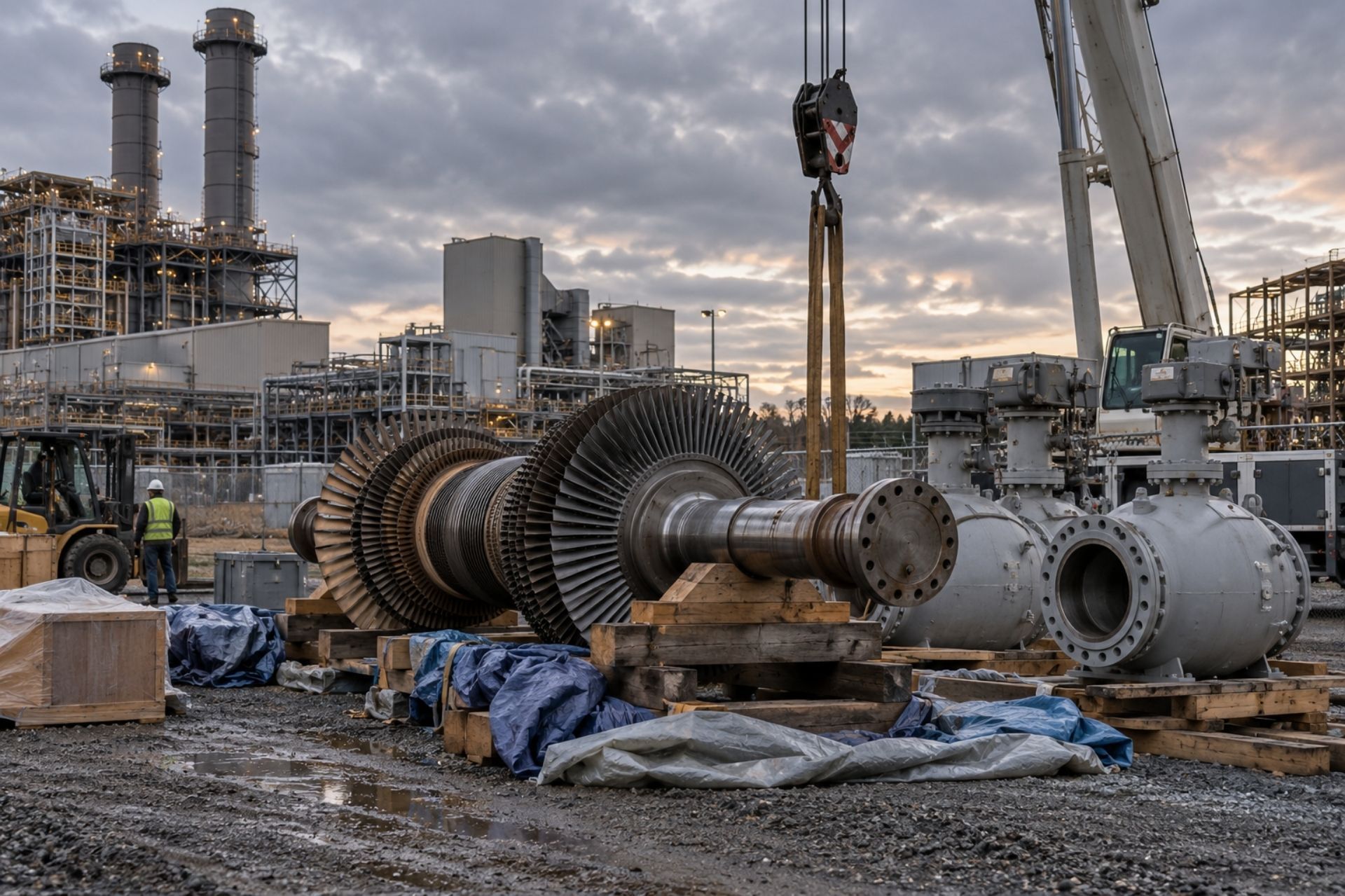
These three categories represent the highest-value, longest-lead-time assets at most generating facilities. A large gas turbine can cost $15 million to $30 million depending on output capacity and configuration. Generator step-up (GSU) transformers, which convert generator output to transmission voltage, now carry average lead times of 144 weeks, with some specialized orders stretching to four years.
That lead time isn't just an inconvenience. It translates directly into business interruption exposure. If your GSU transformer suffers a catastrophic failure and a replacement takes three years to arrive, your revenue loss dwarfs the equipment cost itself. Insurers want to know you've accounted for this in your declared values and your contingency planning.
For renewable facilities, the critical equipment list shifts. Wind turbines involve gearboxes, blades, and nacelle assemblies, each with their own supply chain bottlenecks. Solar installations depend on inverters and tracking systems with costs benchmarked at roughly $1,396/kW for tracking PV in 2026.
Specialized Spare Parts Inventories
Many plant operators maintain inventories of critical spare parts: rotor assemblies, control boards, bearings, and transformer bushings. These inventories represent significant capital, sometimes tens of millions of dollars, and they need to be included in your property valuation.
A common mistake is undervaluing or omitting spare parts from declared values. If a warehouse fire destroys your spare transformer and you haven't declared its value, you'll absorb that loss yourself. Given current procurement timelines, losing an uninsured spare could mean years without a backup for your most critical equipment.
Insurers increasingly want to understand not just what you own, but
how your organization responds to disruption. Demonstrating that you maintain and properly insure a strategic spare parts inventory signals operational maturity and can improve your terms.
Understanding the Coinsurance Clause in Energy Policies
The coinsurance clause is one of the most misunderstood provisions in property insurance, and in energy policies, the financial consequences of getting it wrong are enormous.
How the Coinsurance Formula Works
A coinsurance clause requires you to insure your property to a specified percentage of its actual replacement cost, which typically ranges from 80% to 100% for commercial property. If you fail to meet that threshold, the insurer reduces your claim payout proportionally based on the ratio of the limit carried versus the amount required (https://www.hillockins.com/post/coinsurance-clauses).
The formula is straightforward:
- Claim payout = (Amount of insurance carried / Amount required by coinsurance) x Loss amount
Say your plant has a true replacement cost of $200 million and your policy has a 90% coinsurance clause. You're required to carry at least $180 million in coverage. If you've only declared $140 million and suffer a $50 million loss, your payout drops to roughly $38.9 million. You absorb the remaining $11.1 million yourself, on top of your deductible.
That penalty applies even to partial losses. You don't need a total plant destruction to feel the sting.
The Risks of Underreporting Asset Values
Underreporting is rarely intentional. It usually happens because valuations go stale. A plant operator sets declared values five years ago and never updates them. Meanwhile, transformer prices jumped 77%, turbine costs climbed, and labor rates increased. The declared value that was accurate in 2021 is dangerously low in 2026.
The energy insurance market may be softening in 2026, but lower rates don't help if your coinsurance penalty wipes out a chunk of your claim. Insurers are offering better pricing to well-prepared risks, which means accurate, up-to-date valuations are your best tool for both avoiding penalties and securing competitive premiums.
Working with a specialized energy insurance broker is essential here. These brokers understand the technical nuances of power plant equipment, maintain relationships with Lloyd's syndicates and surplus lines carriers, and can help you build a valuation that withstands scrutiny during a claim.
Comparison: Agreed Value vs. Coinsurance Provisions
You have options beyond the standard coinsurance clause. The agreed value endorsement is the most common alternative, and for high-value power generation assets, it's often the better choice.
Under an agreed value provision, you and your insurer agree on the property's value at policy inception. As long as you maintain coverage at that agreed amount, no coinsurance penalty applies at claim time. This eliminates the risk of a post-loss valuation dispute, which can delay recovery by months.
The trade-off is that agreed value policies require more documentation upfront: formal appraisals, detailed equipment schedules, and engineering data. Insurers won't agree to a value they can't verify.
Valuation Method Comparison Table
| Feature | Coinsurance Clause | Agreed Value Endorsement |
|---|---|---|
| Valuation basis | Policyholder declares value; insurer verifies at claim time | Both parties agree on value at inception |
| Penalty risk | Yes, if underinsured below coinsurance percentage | No penalty if coverage matches agreed amount |
| Documentation required | Minimal at binding; scrutinized at claim | Formal appraisal required upfront |
| Premium impact | May be lower initially | Slightly higher, reflects confirmed value |
| Claim disputes | Common if declared values are outdated | Rare, since value is pre-agreed |
| Best suited for | Lower-value, standardized assets | High-value, specialized power generation equipment |
For most power plants, the agreed value approach provides better protection. The upfront cost of a professional appraisal is trivial compared to the coinsurance penalty on a $50 million loss.
Common Questions About Power Plant Insurance
How often should I update my power plant property valuation? At minimum, every year at renewal. Given the pace of equipment cost increases, especially for transformers and turbines, annual updates are essential. Some brokers recommend quarterly reviews for plants with assets on order or under construction.
Does business interruption coverage account for long equipment lead times? It can, but only if your policy's indemnity period is long enough. Standard 12-month indemnity periods are insufficient when transformer lead times exceed 128 weeks. Work with your broker to extend the indemnity period to match realistic replacement timelines.
What's the difference between a blanket policy and a scheduled policy for power plants? A blanket policy covers all property at all locations under a single limit. A scheduled policy lists specific equipment and values. Scheduled policies offer more precision but require more maintenance. Blanket policies provide flexibility but can mask underinsurance at individual locations.
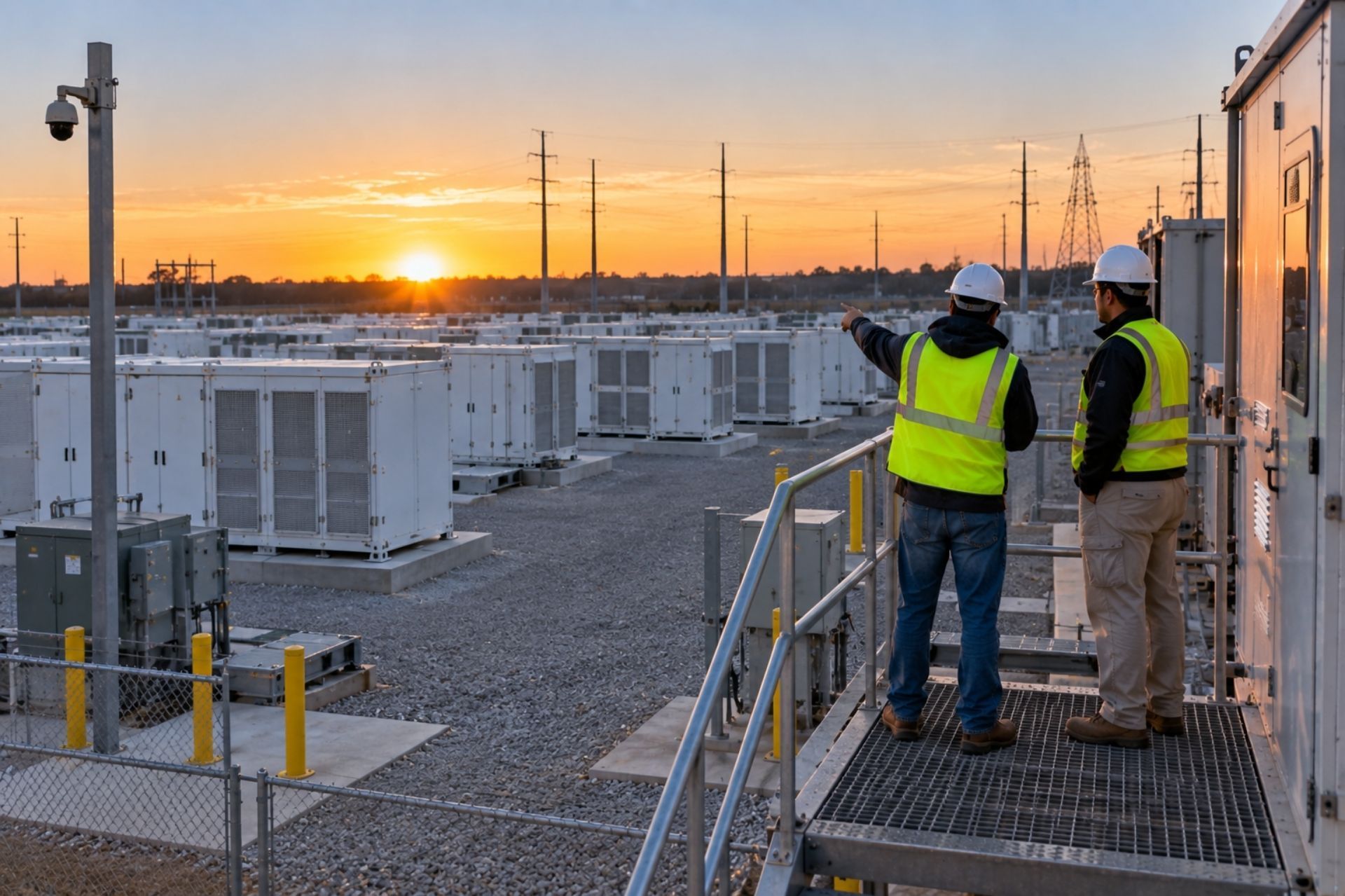
Can renewable energy facilities face coinsurance penalties too? Yes. Solar farms, wind installations, and battery storage facilities are all subject to the same coinsurance mechanics. The rapid growth in renewable capacity means replacement costs are shifting quickly, and declared values can fall behind.
Why do insurers care about my maintenance records? Maintenance history is one of the strongest indicators of future loss potential. A well-maintained turbine with documented inspection records presents a fundamentally different risk than one with gaps in its service history. Providing this data can directly improve your premium and coverage terms.
Protecting Your Long-Term Investment
Accurate power plant valuation isn't a one-time task you complete and forget. It's an ongoing discipline that directly determines whether your insurance program will perform when you need it most. The combination of rising equipment costs, extended lead times, and coinsurance mechanics means the margin for error is shrinking every year.
Start by commissioning a formal replacement cost appraisal from a firm experienced in energy assets. Update it annually. Make sure your declared values reflect 2026 market realities, not historical purchase prices. Then have an honest conversation with a specialized energy insurance broker about whether an agreed value endorsement makes more sense than a coinsurance clause for your facility.
The plants that recover fastest from catastrophic losses aren't necessarily the ones with the most insurance. They're the ones with the right insurance, built on valuations that hold up under pressure. Your next renewal is the right time to close the gap.
Search by posts
Recent posts