Creating a Safety-First Culture in Drilling Operations
See How We're Different
Or Call Us: (281) 823-8262

One shortcut on a rig can sit unnoticed for weeks, then suddenly line up with a bad weather window, a fatigued crew, and a small equipment fault. That is when a routine operation turns into a recordable incident, or worse, a life-altering event. The industry has invested heavily in hardware and procedures, yet incident statistics still remind everyone that work at the wellsite remains unforgiving.
In the first quarter of 2025, participants in the IADC Incident Statistics Program reported 198 total recordable incidents, 58 lost-time incidents, and 2 fatalities across 96 million hours worked, a stark reminder that even with mature systems, exposure is still high for crews at the sharp end of drilling operations according to a summary of IADC ISP data. Those numbers show real progress over time, but they also show that simply having rules and certifications is not enough. What happens in the everyday culture of a rig often matters more than what is printed in the safety manual.
A safety-first culture is not a slogan on the doghouse wall. It is the way supervisors respond when pressure builds, how crews speak up when they spot weak signals, and how leadership reacts when the job falls behind schedule. When culture supports safety, the workforce feels permission to slow down, challenge assumptions, and stop the job without second guessing their careers. When it does not, the same workforce learns to keep quiet and hope for the best.
What Safety-First Culture Really Means On A Rig
Many teams say that safety is their top priority, but on a busy rig that statement can conflict with everything else the crew is asked to deliver. Culture becomes visible in the choices people make when these priorities collide. If personnel believe that hitting footage targets is the only way to earn respect, safety becomes negotiable in the small moments that rarely make it into formal reports.
Research on high-risk industries describes safety culture as the shared values, beliefs, competencies, and behavioral patterns that determine how an organization manages risk across all levels. A report from the National Academies highlights that a robust safety culture does not sit in one department, it permeates the entire organization and needs continuous reinforcement as conditions, personnel, and technology change according to the National Academies Press. On a drilling unit, that plays out from corporate planning offices right down to floorhands tripping pipe in difficult weather.
A strong culture also aligns what the company rewards with what it says it values. If leadership celebrates problem solving that reduces exposure, if it recognizes crews for reporting near misses and improving work processes, then safety-first behavior becomes the norm. If the only stories told in town hall meetings are about fast rig moves and aggressive performance, crews read that signal just as clearly.
Culture Versus Compliance: Key Differences
Compliance focuses on whether people follow rules. Culture focuses on why they choose to follow those rules even when nobody is watching. Many drilling organizations already meet the requirements of regulations, client expectations, and certification schemes, yet still experience preventable incidents. The gap usually lies in how people interpret and apply those requirements under real operational pressure.
Compliance asks whether the permit is filled out and the toolbox talk is signed. Culture asks whether the crew truly understands the hazards, feels comfortable challenging the plan, and believes management will back them if they delay or stop the job. When culture is healthy, workers treat procedures as a support for their judgment, not a substitute for it. When culture is weak, paperwork becomes a ritual that crews rush through to get to the work they are actually measured on.
| Compliance driven approach | Culture driven approach |
|---|---|
| Primary focus on passing audits and meeting minimum requirements | Primary focus on reducing real-world risk and harm to people and assets |
| Safety activities often seen as add-on tasks | Safety expectations embedded in how work is planned and executed |
| Workers complete forms to satisfy management | Workers use tools to clarify risks, speak up, and improve the plan |
| Incidents treated mainly as rule violations | Incidents treated as information about system weaknesses |
Leadership Behaviors That Make Safety Real
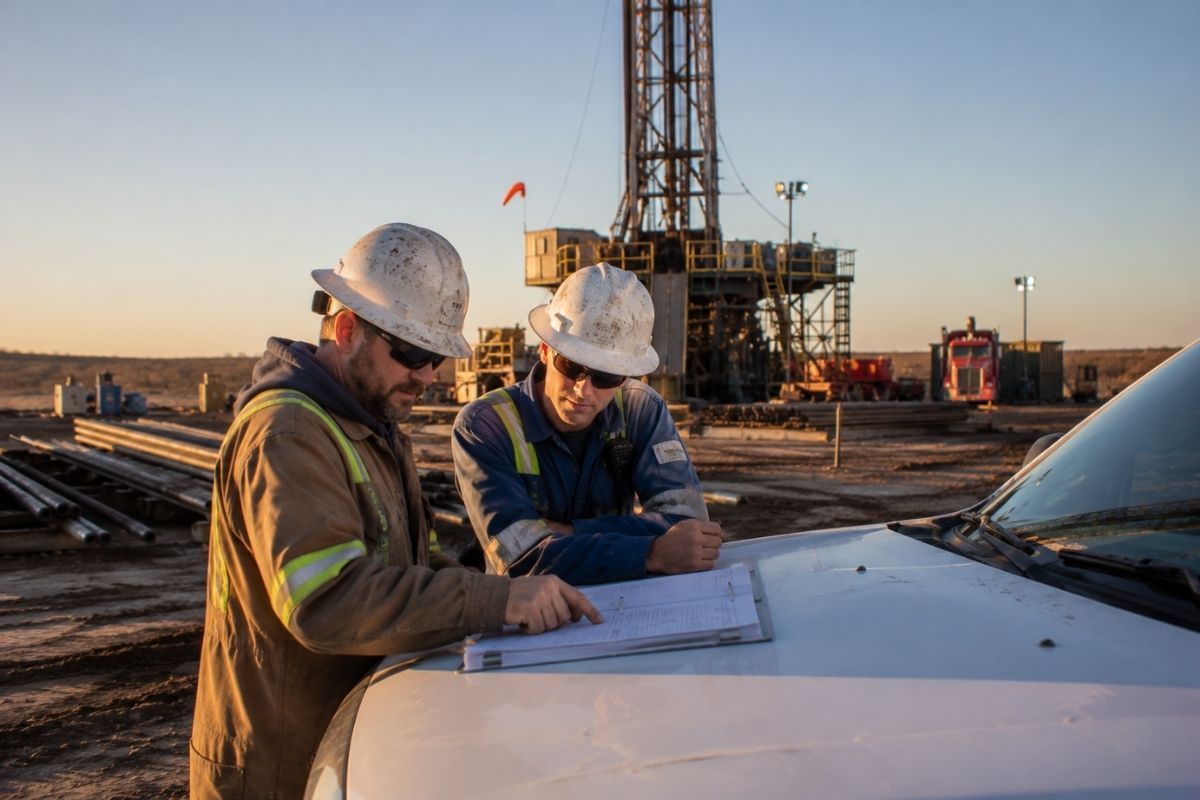
On a drilling unit, culture usually reflects the behavior of leaders more than any corporate program. Crews watch what superintendents, toolpushers, and company representatives actually do. If those leaders walk the worksite, ask open questions, and show curiosity about risk, teams quickly learn that safety deserves attention in real time. If those leaders only visit when something goes wrong, people learn to keep their heads down.
A recent poll of offshore oil and gas professionals found that 38 percent of respondents see improved safety culture and stronger leadership engagement as the biggest opportunity for enhancing safety outcomes in their operations according to Offshore Magazine. That perception comes from experience. Crews know that when leadership is present and consistent, procedures move from being viewed as corporate demands to being seen as shared tools for keeping everyone alive and productive.
The most effective leaders tend to do simple things very consistently. They explain the intent behind safety expectations instead of just repeating the rules. They ask workers to walk them through how a task is really done, including the shortcuts people are tempted to use under pressure. They react constructively when someone raises a concern, even if it slows down the job. Over time, those patterns create psychological safety, which is critical if the team is expected to surface weak signals before they turn into serious events.
From Production At All Costs To Risk-Aware Performance
Turning safety into a non-negotiable value does not mean ignoring cost or schedule. It means refusing to improve those metrics by quietly accepting higher levels of risk for the workforce. Leadership can set the tone by stating clearly that nobody will be rewarded for taking unsafe shortcuts, even if the job gets done faster. That message has to be backed up by actions, especially during unplanned events like stuck pipe, equipment failure, or weather delays.
When leaders link performance recognition to safe execution, people stop seeing safety as the enemy of productivity. They start to see it as part of professional pride. This is especially true when leaders tell detailed stories about crews who identified hazards early, coordinated with other disciplines, and avoided high potential incidents because they refused to take unnecessary chances.
Building Practical Safety Systems That People Actually Use
A culture of safety needs practical tools. Permits, checklists, and procedures only help if they reflect the realities of the job and if crews find them useful instead of burdensome. When these tools are designed around actual field conditions, workers stop viewing them as obstacles and start using them to think through hazards in a structured way.
One study that reviewed a large number of mining safety reports identified six recurring themes that shape safety culture: culture itself, attitude, competence, belief, patterns, and norms according to research in the Saf Health Work journal. Drilling operations share many of the same characteristics. Systems on paper influence behavior only when they connect with attitude, competence, and the informal norms of each crew. That connection usually depends on whether people feel the system helps them do their jobs more effectively, not just more compliantly.
Technology can play a useful role, but it should amplify good practices rather than replace conversations. Digital permits, equipment monitoring, and automated alerts are most effective when they reduce administrative load and give crews more time to discuss the work, rather than burying them in new screens and fields. If a tool does not help the team understand risk better or act faster, it will eventually be ignored in the rush of operations.
Designing Work Around Real Tasks, Not Just Paperwork
Some of the strongest gains in safety performance come from redesigning tasks so that hazards are eliminated or controlled at the source. That might involve how lifts are planned, how confined spaces are ventilated and monitored, or how lines of fire are managed during tripping and casing operations. The starting point is almost always a candid review of how the job is actually being done, not how it was imagined in a procedure drafted far from the rig.
Leaders and safety specialists who approach the work with this mindset tend to build trust quickly. As one QHSE director put it, the goal is to improve the daily work of employees, whatever that work may be, because once workers see that, the relationship with safety advisers changes and both sides get more done according to remarks from Eric Baldridge. When crews experience safety as a way to make tough jobs easier and more reliable, resistance drops and engagement increases.
Learning From Incidents And Near Misses
Even the best run operations will occasionally experience incidents and near misses. What distinguishes resilient organizations is how they learn from these events. Blame focused investigations rarely change anything. System focused reviews, on the other hand, can reveal patterns that let leaders intervene before a fatality or major loss occurs.
Specialists working with serious injury and fatality prevention stress the value of identifying precursors in minor and moderate events. One HSE specialist noted that leaders need enough foresight to examine incidents, notice what feels wrong, and seek out the underlying precursors that led to those events rather than stopping at surface level causes as highlighted by William Arpe of Helmerich and Payne. That mindset turns every incident into a learning opportunity that protects crews from the next, potentially more severe, event.
A practical learning culture encourages reporting of weak signals. Workers should feel safe sharing small mistakes, equipment quirks, or unplanned deviations from procedures. Management then has the responsibility to respond quickly, share findings across the fleet, and implement changes that reach the front line. Without this loop, people eventually stop reporting issues because they see little evidence that it leads to improvement.
From Blame To System-Level Thinking
It is easy, and sometimes emotionally satisfying, to attribute an incident to human error. Yet in many cases, the deeper causes lie in design decisions, staffing levels, training gaps, conflicting priorities, or poorly adapted procedures. Human error is usually a symptom that those system factors were not aligned with the realities of the job.
When investigations search for what made an error likely or even inevitable, organizations uncover avenues for stronger controls. That can lead to better supervision arrangements, more practical training, adjustments to equipment layouts, or changes in how fatigue is managed on demanding campaigns. The workforce quickly notices when lessons from incidents translate into concrete improvements instead of just new rules added to an already crowded list.
Technical Barriers, Equipment Integrity, And Human Factors
Culture shapes how people act, but physical barriers and equipment integrity still play a critical role in preventing major incidents. Blowout preventer systems are a clear example. They provide one of the most important last lines of defense in well control, yet they are complex assemblies subject to wear, harsh operating environments, and subtle failure modes that can unfold over long periods.
An analysis of 1,312 failure records from the IADC RAPID S53 database identified that many major failures in blowout preventer systems were linked to leakages caused by damaged elastomeric seals, drawing attention to the importance of seal condition, maintenance quality, and early detection of small leaks before they escalate according to a technical study of RAPID S53 data. Findings like these underline that safety-first culture must include disciplined attention to asset integrity, not just personal protective behaviors.
At the same time, equipment programs operate within the constraints set by management culture. If crews feel pressured to defer maintenance, ignore small leaks, or operate with known impairments to keep the schedule, then even the best designed systems lose their protective power. A safety-first culture therefore requires realistic planning, adequate resourcing, and clear support for taking equipment out of service when integrity is in doubt.
Bridging The Gap Between Office Assumptions And Rig Reality
Engineering teams, planners, and senior leaders sometimes underestimate the gap between how operations are supposed to unfold and what actually happens on the rig. Unexpected formation behavior, supply chain delays, and weather conditions can push plans off track in ways that risk creeping normalization of deviance at the worksite. Crews learn to work around issues to keep things moving, and over time these workarounds become the new normal.
A safety-first organization works actively to close this gap. That might mean inviting rig crews into planning discussions, capturing lessons from each well and feeding them quickly into the next program, and making it easy for frontline teams to request help when field conditions diverge from expectations. The goal is not to eliminate improvisation, which will always be needed in complex drilling environments, but to make sure that improvisation happens within clear safety boundaries that everyone understands.
Frequently Asked Questions About Safety-First Culture In Drilling Operations
Safety managers, rig leaders, and client representatives often share similar questions when they try to shift from compliance focused safety to a culture where crews genuinely prioritize risk control. Addressing these questions openly can make it easier to align expectations across onshore and offshore teams.
Is a safety-first culture realistic when the rig is under heavy production pressure?
Yes, but it requires clear messages and consistent decisions from leadership. When crews see leaders back them up for slowing down a job to manage risk, even when the schedule hurts, they learn that safety is truly non-negotiable rather than a slogan that disappears under pressure.
How can we measure safety culture without turning it into another paper exercise?
Useful indicators include the quality of hazard discussions, the level of near miss reporting, the speed and visibility of corrective actions, and how crews talk about risk during informal conversations. Surveys can help, but direct observation and honest feedback sessions often reveal more about everyday behavior.
What role does training play in building a safety-first culture?
Training provides the knowledge and skills people need, but culture determines how they use that knowledge in real situations. Hands-on, scenario based training that reflects actual rig tasks tends to support culture better than generic classroom sessions that feel disconnected from the work.
We already meet regulatory requirements. Why is culture still such a big focus?
Regulations and standards set important minimums, yet incidents continue to occur in organizations that comply on paper. Culture shapes how people make decisions when they face conflicting priorities, unexpected conditions, or gaps in procedures, which is why many industry experts now highlight culture and leadership as major levers for improving offshore safety performance as reflected in offshore safety polls.
How do we keep lessons from incidents from fading after a few weeks?
Translate each lesson into specific changes in procedures, training, supervision, or equipment, and then track whether those changes are actually used on the rig. Sharing short, concrete stories about what happened and what changed helps crews remember the lesson long after the initial investigation closes.
Can contractor and operator cultures really align on a multi-party rig?
Yes, but it takes deliberate effort. Joint safety meetings, shared values statements that go beyond contract wording, and collaborative reviews of critical operations help reduce mixed messages. When both operator and contractor leaders send the same signals about safety, crews are less likely to feel pulled in different directions.
Bringing It All Together On Your Rig
Creating a safety-first culture in drilling operations is not a one-time initiative or a new set of posters. It is a long term shift in how people at every level think about risk, production, and their responsibility to one another. The scale of the challenge is clear when considering that in a recent year 74 drilling contractors participating in the IADC Incident Statistics Program reported more than 418 million man hours worked, illustrating the sheer volume of exposure that must be managed across the global fleet according to IADC data. Every one of those hours represents thousands of individual decisions, small and large, that either protect people or increase their vulnerability.
Progress starts with honest reflection. Leaders can ask whether their current behaviors, incentives, and systems truly support the kind of decision making they want to see on the rig floor. Safety professionals can focus on making tools simpler and more helpful so that crews experience safety support as an aid, not a burden. Supervisors and workers can commit to more open conversations about what really happens when operations get tight, so that organizations can learn and improve instead of repeating the same mistakes.
When culture, leadership, systems, and equipment integrity work together, the rig becomes a place where people feel respected, informed, and empowered to do the right thing even when nobody is watching. That kind of environment does not just prevent injuries and incidents. It also produces more stable operations, fewer surprises, and a reputation for reliability that benefits operators, contractors, and crews alike over the long haul.
Search by posts
Recent posts